By: Chris Gates
For years, I’ve spent a lot of time talking about fat loss.
If you’ve read other articles on my website, listened to my podcast, or followed my social media content for any length of time, you’ve probably heard me talk about calorie deficits, losing body fat, improving body composition, and seeing the number on the scale come down. Those things absolutely have their place.
But as I’ve worked with more and more clients over the years, I’ve realized something.
The place I ultimately want every single person to arrive isn’t a lifetime spent chasing a lower number on the scale.
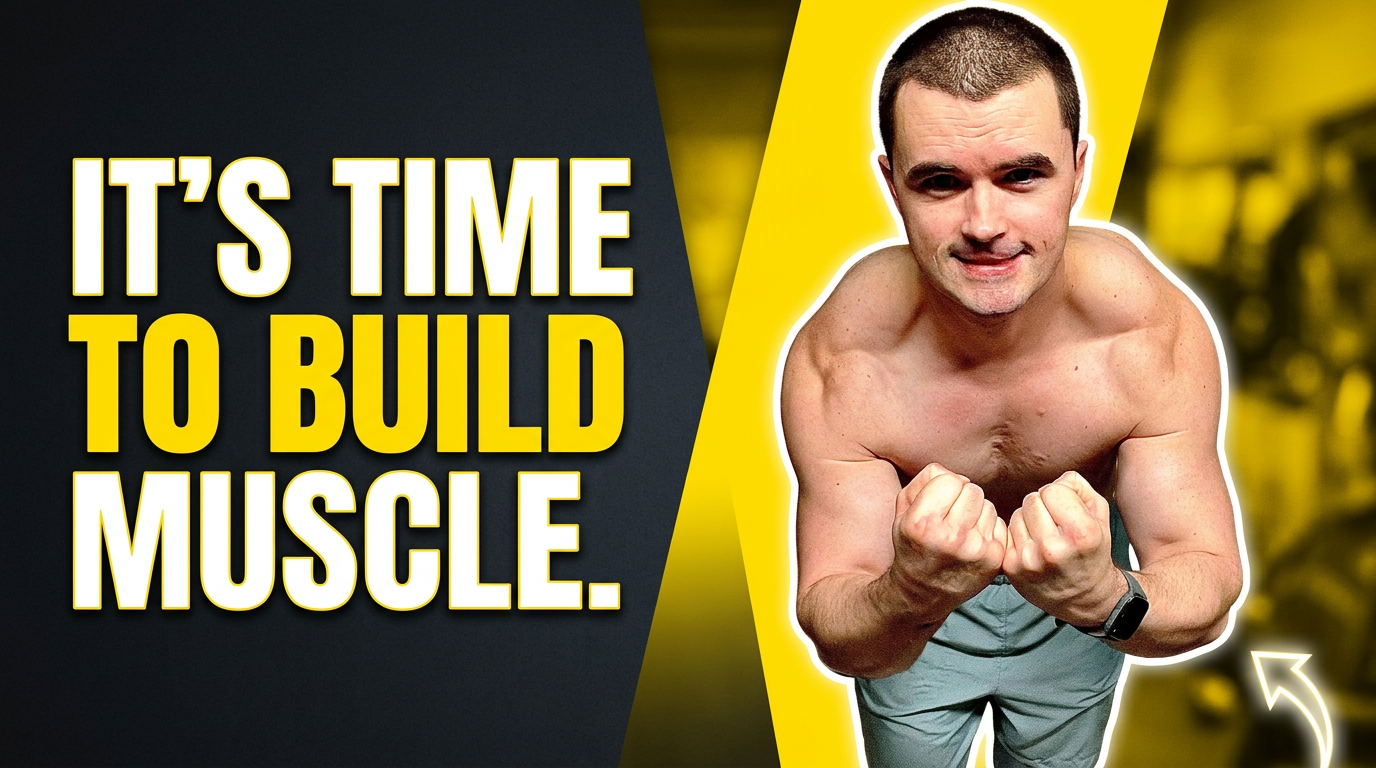
It’s a lifetime spent building muscle.
In fact, if you asked me what I think the average busy adult should spend the majority of their time focusing on over the next several years, my answer wouldn’t be “lose weight.”
It would be “build muscle.”
That might sound surprising coming from someone who helps people lose body fat, but hear me out.
Building muscle creates a trickle-down effect that improves nearly every aspect of your health and fitness. It makes you…
- Stronger
- More capable
- More resilient
- Improves your metabolism
- Gives you more flexibility with your nutrition
- And even makes future fat loss easier
The irony is that many of the things people hope the scale will eventually give them begin to happen when they stop obsessing over the scale altogether.
Learn About 1-on-1 Coaching!
I help moms, dads, and busy adults build muscle, burn fat, and make health and fitness progress without giving up everything that you love. If you’ve tried and failed before, and want to finally see results that lasts, learn more about my 1-on-1 coaching program by clicking the link below!
We’ve Become Obsessed with the Wrong Goal
For decades, health and fitness has largely been reduced to one question: “How do I lose weight?”
It’s understandable. Weight loss is easy to measure, and we’re constantly surrounded by messaging telling us that a smaller body automatically means a healthier one.
But I think we’re starting to see the limitations of that mindset.
With the rise of medications like Ozempic, Wegovy, Mounjaro, and others, people are losing weight faster than ever before. While these medications can absolutely have a place, they also highlight something important.
Losing weight isn’t the same thing as becoming healthier.
Many people are becoming smaller while also losing significant amounts of muscle.
I believe we’re heading toward a future where one of our biggest health challenges won’t simply be obesity—it will be being under-muscled.
Muscle isn’t just something that changes how you look. It’s one of the most valuable assets you can have for your long-term health.
That’s why I think it’s time to shift the conversation.
Train With a Purpose
One of the first things that changes when your goal becomes building muscle is your relationship with exercise.
Instead of asking: “How many calories did I burn?”
You start asking:
- “Can I lift five more pounds than last week?”
- “Can I do one more rep?”
- “Can I improve my form?”
- “Can I move through a better range of motion?”
Those are exciting goals because they’re completely within your control.
The scale fluctuates for dozens of reasons that have nothing to do with whether you’re making progress. Stress, sleep, hydration, sodium intake, digestion, hormones, and countless other factors can make your weight jump around from day to day.
Performance is different.
Every time you walk into the gym, you have an opportunity to become just a little bit better than you were last week.
That creates purpose.
It makes training more enjoyable.
And it builds momentum.
Get My Free Calorie Calculator!
If you’re looking to build muscle, burn fat, or just generally improve your eating habits, make sure you grab my Calorie Calculator! In less than 60 seconds, it will tell you how many calories, protein, carbs, and fats you should eat to reach your goals.
Building Muscle Changes Your Relationship With Food
This is one of my favorite parts of the process.
When your goal is simply to lose weight, food often becomes the enemy.
You start asking yourself questions like:
- “How little can I eat today?”
- “How can I stay under my calorie goal?”
But when your goal shifts toward building muscle, those questions change.
Now you’re asking: “How can I fuel my body?”
That subtle mindset shift makes a huge difference.
You naturally begin prioritizing protein.
You eat more fruits and vegetables.
You hydrate better.
You start viewing nutrition as something that supports your performance instead of something you’re constantly trying to restrict.
It’s no longer about surviving another day in a calorie deficit.
It’s about giving your body what it needs to recover, adapt, and grow stronger.
Strength Makes Everyday Life Easier
The benefits of building muscle extend far beyond the gym.
Think about everything you do during a normal week.
- Carrying groceries.
- Picking up your kids.
- Walking up stairs.
- Working in the yard.
- Moving furniture.
- Going on hikes.
- Traveling.
- Playing sports.
Every one of those things becomes easier when you’re stronger.
I think that’s what health and fitness should really be about.
Yes, looking good is great. I enjoy that just as much as anyone else.
But I also want to be the person who can carry every grocery bag into the house in one trip.
I want to be able to pick up my daughters without worrying about my back.
I want to build furniture, work around the house, and stay active for decades without wondering whether my body can handle it.
That’s real fitness.
A Stronger Body Is a More Resilient Body
As we get older, strength becomes even more important.
Building muscle doesn’t just improve performance. It helps build resilience.
A stronger body typically means stronger joints, better balance, improved coordination, and better posture.
I’ve seen this happen with countless clients.
Some have watched nagging shoulder pain disappear as they became stronger.
Others have improved chronic back pain simply because they finally started strengthening the muscles that support their spine.
Strength training doesn’t make you invincible. But it does make your body far more prepared for the demands of everyday life.
And that’s important because slips, trips, falls, and injuries become much more significant as we age.
Building muscle today is one of the best ways to protect your future self.
Muscle Builds Your Metabolism
One of the biggest misconceptions I hear is: “My metabolism is slowing down because I’m getting older.”
The reality is a little more nuanced.
Yes, metabolism gradually declines over time.
But much of what people experience is the result of becoming less active, losing muscle mass, and gradually moving less throughout the day.
Muscle is metabolically active tissue. That means your body requires more energy to maintain it than it does fat tissue.
The effect isn’t dramatic overnight.
Building a few pounds of muscle isn’t going to suddenly increase your daily calorie burn by hundreds of calories.
But over months and years?
It matters.
The more muscle you carry, the more calories your body naturally requires just to maintain itself.
A Higher Metabolism Gives You More Freedom
Here’s where things start getting really fun.
As you build muscle and your metabolism gradually increases, your calorie budget becomes larger.
In other words, you can generally eat more food while maintaining your body weight.
That creates flexibility.
- You have more room for family dinners.
- Vacations become less stressful.
- You don’t feel like every meal has to be perfect.
Instead of constantly feeling restricted, you get to enjoy food while still supporting your goals.
That’s a much more sustainable way to live.
Building Muscle Makes Fat Loss Easier Later
This is one of the biggest mindset shifts I’d love to see more people embrace.
Most people think they should lose weight first and build muscle later. In many cases, the opposite can actually make the entire process easier.
When you’ve spent months building muscle, improving your nutrition, and increasing your maintenance calories, creating a calorie deficit becomes much more manageable.
You’re starting from a healthier place.
You can eat more food while still losing body fat.
You don’t have to diet as aggressively.
And perhaps most importantly, when you eventually lose the body fat, you’ll actually have the muscle underneath to create the look you’re hoping for.
Confidence Comes From Capability
One of the most rewarding parts of coaching isn’t watching someone hit a certain number on the scale.
It’s hearing things like:
- “I carried my kids all afternoon.”
- “My back doesn’t hurt anymore.”
- “I never thought I’d be able to lift that much.”
- “I kept up with everyone on vacation.”
Those victories build a different kind of confidence.
They’re rooted in capability.
The confidence that comes from becoming stronger tends to last much longer than the excitement of seeing a new low number on the scale.
Spend More Time Building Than Dieting
If I could encourage you to make one change this year, it would be this: Spend less time trying to make yourself smaller.
Spend more time trying to make yourself stronger.
That doesn’t mean fat loss is bad. It simply means it shouldn’t be the only phase you ever live in.
Most people shouldn’t spend all year in a calorie deficit.
Instead, spend the majority of your year focusing on building muscle, improving your performance, and becoming more capable.
Then, when you want to lose a little body fat, use a shorter, intentional fat-loss phase before returning to building again.
I truly believe that’s one of the healthiest and most sustainable ways to approach fitness.
The Bottom Line
The number on the scale can tell you what happened this week.
Building muscle changes what happens over the next 10, 20, and 30 years.
So instead of asking yourself how quickly you can lose ten pounds, try asking a different question:
How much stronger could I become over the next year?
Because when you focus on becoming stronger, healthier, and more capable, you may be surprised by how many of your original goals take care of themselves along the way.