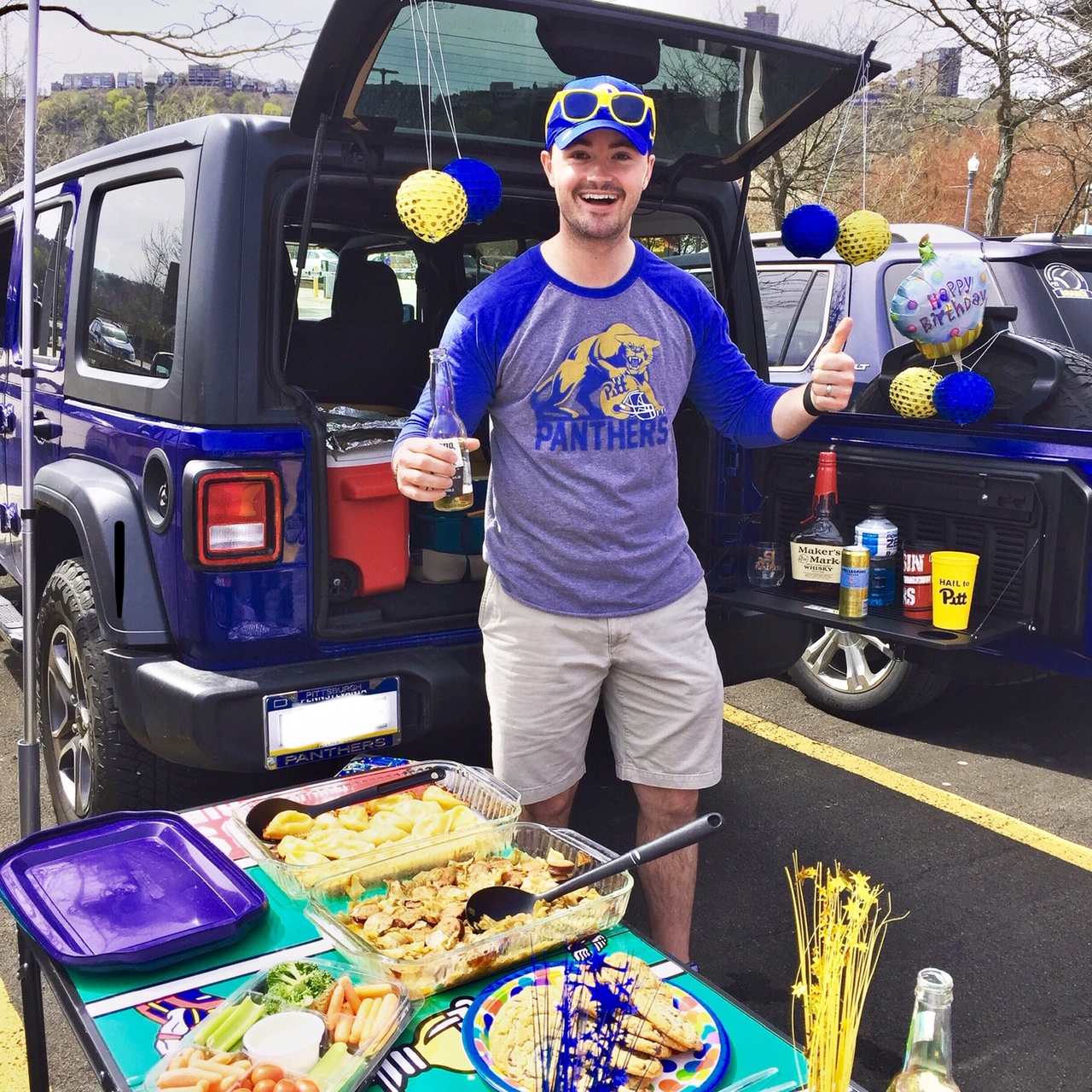
In my humble but completely correct opinion, the beginning of football season is the absolute best time of the year.
Football is starting, for one, and that’s a big reason. With it comes tailgating, road trips, and a ton of fun. The weather is typically beautiful in September and early October as well. And hockey season is right around the corner, too.
What more could you want?!
Understandably, though, this could be the start of a challenging stretch of time for many of us in regards to watching our weight. With football season normally comes weekend tailgates, cookouts, or other get-togethers. The weekend menu is rarely healthy, and we’re programmed to indulge.
It’s not really possible to pick “the healthy option on the menu” when it doesn’t exist. It’s burgers, dogs, wings, beers, chips, dips… You know the drill.
Over the years, I have figured out a way to be able to indulge at these weekend events but still maintain my weight (or even lose a few pounds) throughout the course of a football season. I figured I’d share these tips now in order to help as many people as possible manage their weight during the most fun (and trying) time of the year for dieting.
Here are three steps you can take to make the most out of your fall.
Step 1: Track Your Food
If you’ve read any of my articles over the years, you probably saw this one coming. If you’re new to my content, then perhaps this is new, too. Whatever the case may be, this is always my No. 1 recommendation because it flat out works.
If you’re not aware of how many calories you’re consuming, you’re not going to be able to efficiently control your diet.
Luckily, this is something made very easy thanks to technology.
Stop reading this article right now and download the My Fitness Pal app (or a similar nutrition-tracking app). The app has a gigantic database of foods that allows you to track virtually everything you regularly eat. Use this tool to track what you’re eating each day to get an idea of how many calories you’re consuming.
That’s a huge first step. Understand how much you’re eating on a daily basis.
If you want to dig deeper into how to track your diet, check out my article on tracking macros.
Step 2: Give Yourself Flexibility Throughout the Week
Once you’re in the groove with documenting what you eat and get an idea of your average daily calorie intake, making a few easy adjustments can go a long way towards setting up successful weekends.
When you get your average daily intake — let’s say it’s 2,000 calories for the sake of simplicity — easy addition and subtraction can make a gigantic impact.
If you average 2,000 calories a day, try subtracting 100 calories from your Monday-Friday routine. Cut yourself off at 1,900 calories each day, then reallocate those 500 total calories you’ll save to your Saturday or Sunday football festivities.
That means you can take in a whopping 2,500 calories at the tailgate, cookout, or get together! That’s a lot of flexibility.
Then, get right back on to your plan the next day.
Too much stress goes into when we eat what we eat. Overall, the most important factor in gaining or losing weight is how many calories we take in over an extended period of time. Quantifying your caloric intake by total weekly calories is a great barometer for success (or failure, if you fall off your plan and see your weight go wildly in the wrong direction).
Treat your diet as a week-long plan each week and allocate flexibility as needed in order to have success.
Step 3: Enjoy Yourself, Within Reason
Through steps 1 and 2, you’ve put a pretty decent game plan in place. Now it’s time to enjoy yourself when you have the flexibility to do so.
Don’t treat that flexible day as an all-out binge, but indulge in the game-day festivities. Be cognizant of what you’re eating, and still make sure you track all of the food, drinks, etc. for the day.
This is the day to enjoy yourself. This is why we structure a diet based around football.
Enjoy it! Then get right back to the plan the next day.
Bonus Tip: Use Intermittent Fasting on Game Day
If you’re not familiar with intermittent fasting, definitely check out my article on how skipping breakfast can be an incredibly valuable tool to weight loss. I don’t want to bog you down with the breakdown on the what, why, when, etc. here.
Rather, I’d like to give you a game plan…
On game day morning, skip breakfast. Grab your morning cup of coffee and dive right into the day, whether that’s packing up the car to head to your tailgate, cooking up a side dish to take to your game-watch party, or doing chores around the house before the game starts.
You’ll probably be surprised at how little you think about food early in the day when you have some coffee and get right into the swing of things.
This is a great tool, because eliminating that first meal gives you even more flexibility for the rest of the day, on top of the conservation you did during the week.
Say you typically have a 300-calorie breakfast (not uncommon for something like a protein bar and a shake). Add those 300 calories the the 500 we talked about above, and you’re getting close to 1,000 extra calories you can enjoy over the weekend.
It’s simple math, folks.
—
Make the right choices. Put a plan in place. And mostly importantly, enjoy yourself this football season.
And if you have more questions on how to put a nutrition plan together, or if you are interested in coaching to help guide you through the fall, please contact me and let’s talk about what might work for you.
And as always, thanks for reading!
CGF