By: Chris Gates
Building muscle is one of the most fun fitness goals to pursue, but man does it involve a lot of variables.
- You HAVE to work hard.
- The workout program you choose is really important.
- Nutrition will determine a lot of your progress.
- And recovery outside of the gym is going to impact every step of the journey.
To maximize your progress, it’s essential to focus on three key pillars: nutrition, progressive overload, and recovery.
This article is the ultimate guide to build muscle, so we’ll break down each of those elements and more to help you get on the path to making major gains in the gym!
Sound good to you?
Alright! Let’s dive in…
Want Help on Your Muscle Building Journey?
Learn about 1-on-1 online fitness coaching! We can work together from anywhere in the world and get you on a 100% personalized program that WORKS 💪🏼
The Ultimate Guide to Building Muscle: Progressive Overload is Key
In order to build muscle, you need to stimulate muscle growth.
Meaning, the way you train in the gym must force your body to adapt.
Enter: progressive overload.
Progressive overload is the gradual increase of stress placed on your muscles during strength training. This principle is fundamental to muscle growth, as it forces your muscles to adapt and become stronger over time.
Without progressive overload, your muscles have no reason to grow. So each time you go into the gym with the goal of building muscle, you need to have a mindset and focus of improving on your past performance.
Training legitimately hard, and then harder over time, is required to build muscle.
How to Implement Progressive Overload
There are several ways to progressively overload your muscles:
- Increase Weight: Gradually add more weight to your lifts. For example, if you bench press 100 pounds this week, try to bench press 105 pounds for the same amount of sets and reps next week.
- Increase Reps: Add more repetitions to your sets. If you’re currently doing 8 reps of a certain exercise, try to do 9 reps the next time you hit the same exercise.
- Increase Sets: Adding more sets to your routine can also create more volume, which in turn challenges your muscles.
- Improve Form and Control: Slowing down the tempo of your lifts or improving your form can increase the time under tension, leading to greater muscle activation.
Any of these things in isolation is considered progressive overload. You don’t have to do ALL of them.
Simply adding one more rep is progressive overload. It’s a sign your body is adapting to your strength training program.
Tracking Progress
Now that you know what progressive overload is, and how to do it, let’s address the obvious…
You have to actually track your progress.
This is a mistake I made countless times in my early years of lifting. I’d go into the gym each week, do the same exercises, and convince myself that I was making progress.
But I didn’t write anything down.
So I actually had no clue if progress was truly happening.
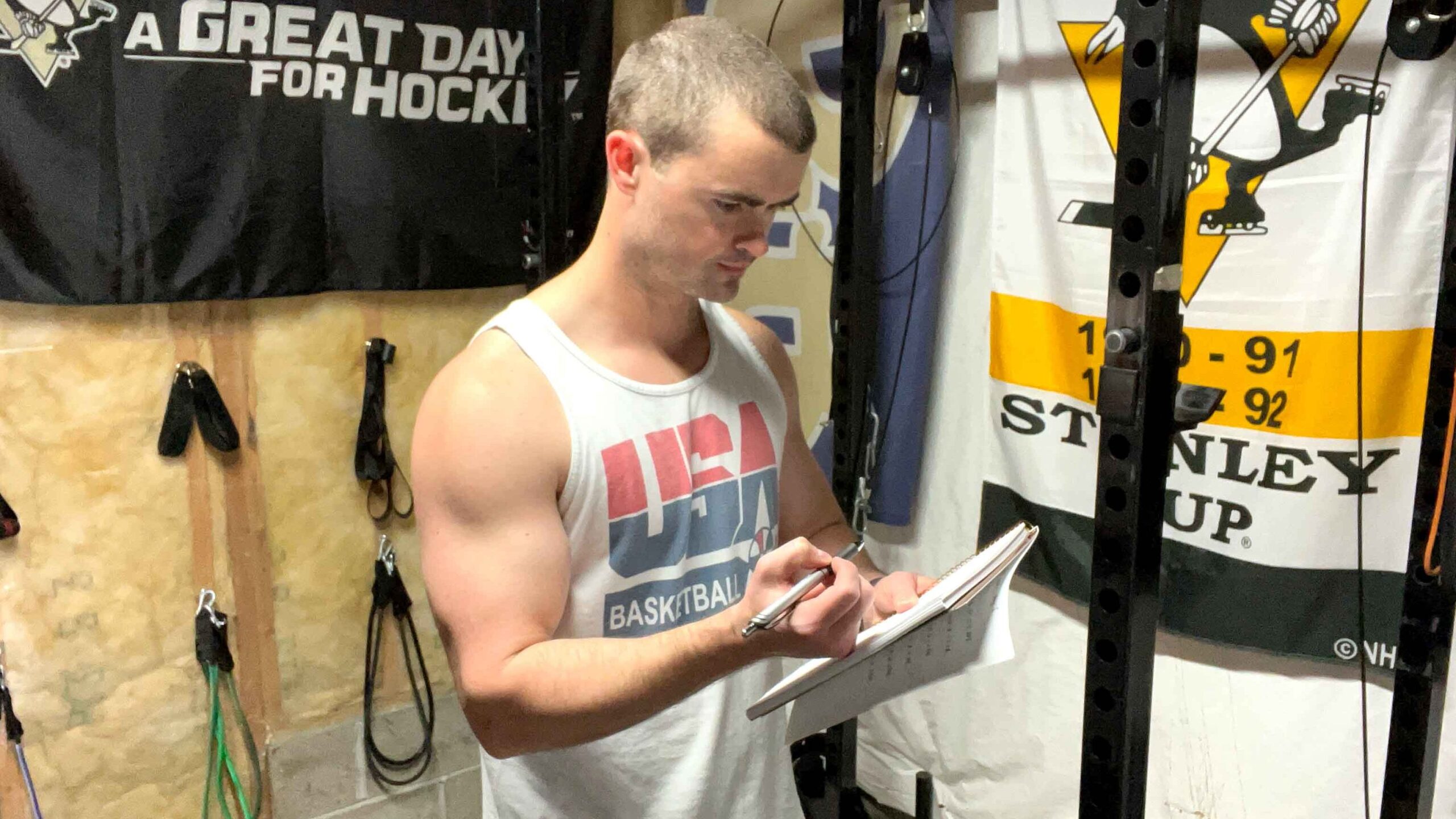
You need some type of workout log book to document what you’re doing in the gym, and ensure that your training performance goes up.
You can do it however you’d like. But just make sure you’re logging your workouts in a way you can be consistent.
- A notebook
- The notes app on your phone
- A spreadsheet (this is what I use with my clients)
- A fitness tracker (there are tons of apps available)
Keeping track of simple information is easy to do during your rest periods, and it goes a long way towards ensuring you’re able to make progress.
Here’s what I have my 1-on-1 online fitness coaching clients track in each workout for each exercise:
- Amount of sets
- Weight used for each set
- Reps completed for each set
Do a set. Write down what you did in that set. And repeat the process.
Join Training Camp!
Get your fitness journey started today with the support of an entire community, in Training Camp!
The Ultimate Guide to Building Muscle: Nutrition Grows Muscle
While progressive overload stimulates muscle growth, nutrition is what actually allows your body to BUILD new muscle.
So let’s talk about the core foundations of a muscle building diet.
Protein
Protein is the most crucial nutrient when it comes to building muscle. It provides the essential amino acids your body needs to repair and grow muscle tissue.
After you lift weights, the protein you eat floats through your bloodstream and gets delivered to the muscles that need it most.
And that protein is put to good use, as it helps repair, rebuild, and grow muscle.
General recommendations:
- Try to consume ~1 gram of protein per centimeter of your height (Ex: 180 cm tall = 180 grams of protein per day).
- Include a wide variety of protein sources, if possible (lean meats, fish, eggs, dairy products, beans, lentils, etc.).
If you can hit your protein goal consistently, you’ll cross one of the major items off your muscle building list.
It doesn’t matter too much about when you eat protein — just that you do it.
So if you have most of your protein early in the day, or after your workout, or spread out evenly across each meal…
It’s all good.
Simply hitting that target number on a daily basis will drive the majority of your results.
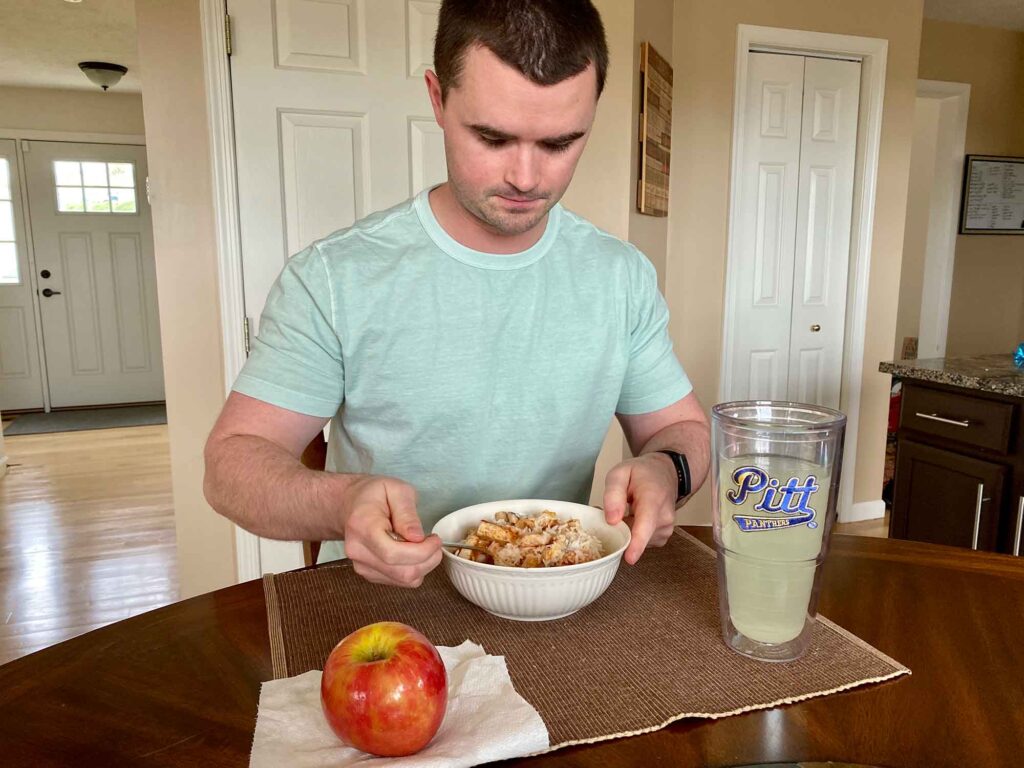
A Calorie Surplus Fuels Recovery and Growth
In addition to adequate protein, being in a slight calorie surplus is going to be optimal for most people.
Think about it this way…
- Calories coming into your body are resources.
- Training breaks down your muscles.
- Your body needs resources to repair those muscles.
- Calories fill that void and give your body what it needs to grow.
To be in a calorie surplus means you’re consuming more calories than your body needs to maintain its weight.
A calorie is a unit of energy, and so when you consume more energy than your body needs, you’re providing extra energy to aid in the recovery process.
Now, there are a couple of unique circumstances that will allow you to build muscle without being in a surplus.
- Beginners: If you’re brand new to strength training, you’ll build muscle regardless of how “dialed in” your diet is. But this won’t last forever.
- Very overweight or obese: If you have a lot of weight to lose, your body already has a lot of stored energy (body fat), so you’ll be able to build muscle at maintenance, or even in a calorie deficit.
But for most people, being in a slight calorie surplus (10-15 percent above your maintenance), will put you in an optimal positive with your diet.
FREE Calorie Calculator!
Does setting up your calorie surplus seem confusing? Don’t worry! My calorie calculator makes setting up your diet a breeze ⬇️
Macronutrient Balance: Do Carbs and Fats Matter?
While calories and protein are vital, don’t neglect carbs and fats.
Carbohydrates provide the quickest and most readily available energy needed for intense workouts.
And fats support hormone production, including testosterone, which plays a key role in muscle growth.
All macros matter and play a role in your rate of progress.
But at the end of the day, calories and protein matter most. So focus on those first, and then turn your attention to carbs and fats second.
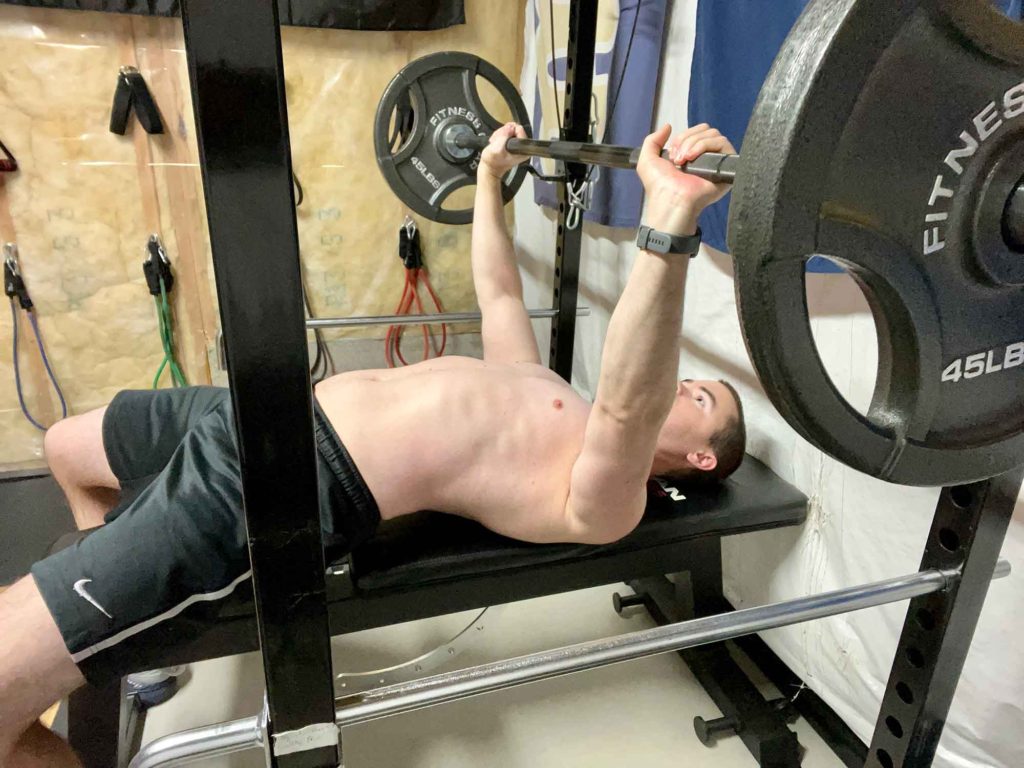
The Ultimate Guide to Building Muscle: Recover to Grow
Recovery is the final piece to the puzzle in the ultimate guide to building muscle, but first let’s recap how we got here.
- Progressive overload gives your body the stimulus it needs to grow.
- Nutrition provides your body with resources to build muscle.
And now that we’ve reached the recovery section, we can talk about when building muscle actually occurs.
Because even though it may sounds backwards, the majority of your muscle growth actually happens when you’re not doing much of anything at all.
Let me explain…

You Grow When You’re Sleeping
Sleep is where most of your muscle recovery happens.
During sleep, your body goes through various sleep cycles to repair your body both mentally and physically. Both are crucial for building muscle.
- During deep sleep phase, your body releases growth hormone, which plays a crucial role in muscle repair and growth. It allows you to build muscle and show up energized and ready to train hard each day.
- During the REM (rapid eye movement) sleep phase, your brain stores memories and goes through it’s own recovery processes. This allows you to have clear focus the next day and be able to put your best brainpower into your training.
When you’re getting adequate sleep (7-9 hours a night consistently), recovering and making more progress gets a lot easier.
On the flip side, when you’re NOT sleeping enough, building muscle gets a lot more difficult — if not impossible.
The Importance of Rest Days
In addition to getting enough sleep each day, building rest days into your program is crucial for building muscle.
Having 2-3 rest days a week where you’re not participating in any type of strength training will continue to promote recovery and let your muscles, bones, ligaments, tendons, and joints feel fresh and operate more effectively.
Many people like to think that “more is better” with strength training, but that couldn’t be further from the case.
Better is better. And a program with the right combination of training and rest will promote the greatest gains.
Now, you can still participate in light- or low-intensity forms of exercise on rest days. So if the idea of just sitting around on your keister sounds awful, here are a few options:
- Walking
- Swimming
- Stretching
- Yoga
- Hiking
Those forms of exercise are considered “active recovery” and promote blood flow throughout the body without being overly stressful or challenging, which can actually enhance recovery.
Subscribe to My Podcast!
Want to learn more about this topic, and dive deep into other aspects of health and fitness? I publish brand new podcast episodes every single week ⬇️
Stress Plays a Role, Too
When you’re chronically stressed, it increases cortisol levels in your body.
And when that happens, it can negatively impact muscle recovery and growth.
So whatever you can do to mitigate those stress levels is going to be ideal.
And I know, I know. That’s often much easier said than done. But reducing stress can often fit well into the other recovery modalities we’ve already discussed.
- On a rest day, go for a long walk or attend a yoga class.
- Spend time in nature on a consistent basis.
- Give yourself self-care days when work gets particularly stressful.
- Remove yourself from stressful situations before your emotions boil over.
Whatever you can do to make sure stress isn’t chronic… It will help.
We’ll never completely eliminate stress from our lives. But we can reduce it.

The Ultimate Guide to Building Muscle: A Sample Routine
At this point, you’ve got all the knowledge to make considerable progress. You’ve completed the ultimate guide to building muscle.
So, to reward your efforts, here’s an example of what an optimal muscle building day might look like!
Nutrition Plan:
- Breakfast: Scrambled eggs with spinach and whole-grain toast.
- Post-Workout Shake: Whey protein shake with a banana.
- Lunch: Grilled chicken breast with quinoa and mixed vegetables.
- Dinner: Salmon with sweet potatoes and a side salad.
- Snack: Greek yogurt.
Workout Plan:
- Day 1: Push Day (Chest, Shoulders, Triceps)
- Day 2: Pull Day (Back, Biceps)
- Day 3: Rest Day
- Day 4: Lower Body Day
- Day 5: Total Body Workout
- Day 6: Rest or Active Recovery
- Day 7: Rest or Active Recovery
Recovery Routine:
- Sleep: Aim for 8 hours.
- Hydration: Drink half your bodyweight (or more) in ounces of water.
- Relaxation: Spend 15-20 minutes on stress-reducing activities.
By focusing on proper nutrition, consistent progressive overload, and adequate recovery, you’ll be well on your way to packing on TONS of muscle.
Remember, muscle growth is a marathon, not a sprint. Stay dedicated, track your progress, and adjust your routine as needed to keep seeing results.
I hope this helps!
Ready to Get to Work?
If you’re motivated to build more muscle and strength but want guided coaching in the process, that’s why I’m here!
I work with people all over the world to build muscle, burn fat, and reach their health and fitness goals. And I’d love to help you, too!
Head over to my coaching page to learn more and fill out an application.
~ Chris