By: Chris Gates
We’ve all been there…
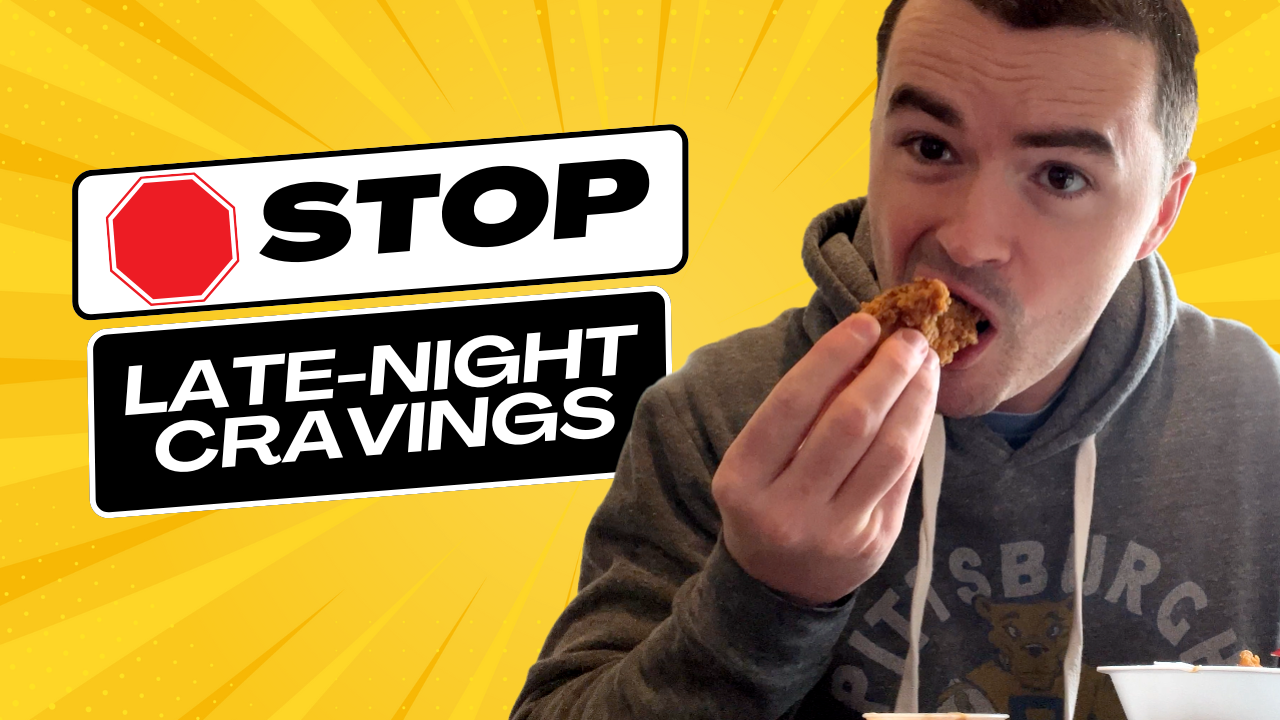
It’s 9:30 p.m. The kids are finally in bed. You’re on the couch for the first time all day, and all of a sudden—boom—the urge to snack hits hard.
Chips. Ice cream. Whatever’s in the pantry. You want it.
If you’re trying to lose weight or improve your health, those late-night cravings can be frustrating. Especially when they feel like they come out of nowhere and wreck an otherwise solid day.
So let’s talk about it.
In this article, I’ll walk you through:
- Why late-night cravings happen (and why they’re not a sign of failure)
- Practical strategies to stop them in the moment
- What you can do earlier in the day to prevent them from happening at all
- A few key mindset shifts to help you feel more in control
Let’s dive in.
Why Late-Night Cravings Happen
Before we talk about how to fix them, it’s important to understand why cravings show up in the first place.
The good news? You’re not broken. This isn’t a willpower issue. Late-night cravings often come down to a mix of physiological and psychological factors.
1. You Didn’t Eat Enough During the Day
If you’re under-eating—especially skipping meals or restricting too much—your body is going to fight back.
A low-calorie day leads to a hunger debt. And when your body needs fuel, it will send strong hunger signals… often when you’re finally relaxed and not distracted by work or responsibilities.
2. You’re Missing Key Nutrients (Especially Protein & Fiber)
Protein and fiber are the two biggest drivers of satiety. If your meals throughout the day are carb-heavy but low in protein and fiber, you might feel full short-term but end up hungry again later—especially at night.
3. Your Hunger Hormones Are On a Schedule
This one’s sneaky.
Your hunger hormones—like ghrelin—rise and fall based on your routine. If you’re used to snacking every night around 9 p.m., your body starts to expect food at that time. Even if you’re not truly hungry, ghrelin spikes and says, “Hey, where’s that cookie we usually get right now?”
The habit reinforces itself. And over time, it becomes harder to tell the difference between real hunger and conditioned cravings.
4. You’re Not Sleeping Enough
When you’re sleep-deprived, your body produces more ghrelin and less leptin. That means more hunger, less satisfaction, and stronger cravings—especially for quick energy sources like sugar and fat.
5. You’re Eating for Emotional or Mental Relief
At the end of a long day, food can become a reward. A way to relax. A comfort. That’s totally normal, but if we don’t have other ways to wind down or manage stress, food becomes the default—whether we’re hungry or not.

How to Stop Late-Night Cravings In the Moment
When the craving hits, here are a few tools you can use right away:
✅ Brush Your Teeth Early
Sounds simple, but brushing your teeth signals “we’re done eating.” Plus, most food doesn’t taste great after a fresh minty rinse. This habit disrupts the pattern and often kills the craving before it escalates.
✅ Drink Water or Herbal Tea
Many times, we confuse thirst with hunger. A glass of water, or a warm cup of peppermint or chamomile tea, can be enough to satisfy the craving and settle your system.
✅ Use the 10-Minute Rule
Tell yourself you’ll wait 10 minutes. Walk away, do something else, and give your body and brain time to assess whether you’re actually hungry—or just reacting to a cue. Most cravings pass when given a little time.
✅ Go to Bed Earlier
The longer you stay up, the more opportunities you give yourself to eat. If you’re regularly awake at midnight, you’re likely to snack out of habit, boredom, or exhaustion. Improving your sleep routine can reduce cravings significantly.
✅ Keep Trigger Foods Out of Sight
Out of sight, out of mind works. If you keep snacks in the house for your family, consider storing them out of reach or in a separate space you don’t access often. The more effort it takes to get to them, the less likely you’ll impulsively dive in.
✅ Have a “Planned” Nighttime Snack
Sometimes, trying to resist entirely backfires. Instead, plan for it:
- Protein shake
- Non-fat Greek yogurt with fruit
- Low-calorie popcorn
- A small cheese stick or boiled egg
These types of snacks can scratch the itch without blowing your calorie target. And because they’re higher in protein or fiber, they’re more satisfying than sugary or salty processed foods.
✅ Do Something Else
Cravings often come from boredom. Try stepping outside for a walk, stretching, journaling, or diving into a hobby. Redirect your attention, and you’ll usually break the craving loop.

How to Prevent Late-Night Cravings Before They Start
Here’s the real secret: the best way to beat nighttime cravings is to set yourself up for success earlier in the day.
Here’s how:
🍳 Eat Balanced Meals Throughout the Day
Make sure each meal has a good mix of protein, fiber, carbs, and fat. Balanced meals stabilize your blood sugar and keep you full longer—so cravings don’t hit you like a freight train at 9 p.m.
🥩 Don’t Undereat
Trying to “save calories” for later is one of the biggest traps. It usually leads to overindulging at night. Instead, fuel your body consistently throughout the day and remove the need to binge later.
🧠 Plan for a Snack on Purpose
If you know you enjoy a little treat at night, don’t resist it—structure it. Give yourself a defined snack with a set portion and calorie amount. That gives you freedom without things getting out of control.
⏰ Stick to a Routine
Your hunger hormones love consistency. Try to eat at roughly the same times each day. That helps train your body to expect food during the day—not at 10 p.m. on the couch.

Mindset Shifts to Make the Process Easier
Your mindset matters just as much as your strategy. Here are a few reframes that can really help:
🎯 Cravings Aren’t a Failure—They’re Feedback
If you’re getting strong cravings, it’s not a sign you’ve failed. It’s a sign something needs attention—your food intake, your stress, your sleep, or your habits. Tune in and learn from it.
🧱 You Don’t Need to Be Perfect
You don’t have to “win” every night. One snack doesn’t ruin your progress. What matters most is consistency over time. If you’re solid 80–90% of the time, you’re going to be just fine.
📒 Awareness Beats Willpower
Start noticing why you’re craving food at night. Are you bored? Tired? Stressed? Just used to it? Write it down. That awareness builds over time and helps you make better choices.

Final Thoughts
Late-night cravings are normal. Everyone experiences them from time to time—even the most consistent people.
But the good news is, they’re not random. And they’re not something you just have to “suffer through.”
You can take control of the habit.
By fueling your body well during the day, understanding what your body and brain are really asking for at night, and using simple strategies to disrupt the cycle, you can make late-night snacking a choice—not a compulsion.
Want more help building healthy, sustainable habits?
That’s exactly what I do in my 1-on-1 online coaching program. We’ll work together to build a plan that fits your life, helps you reach your goals, and gives you the tools to stay consistent—without cutting out the foods you love.
Interested? Click here to learn more and apply.